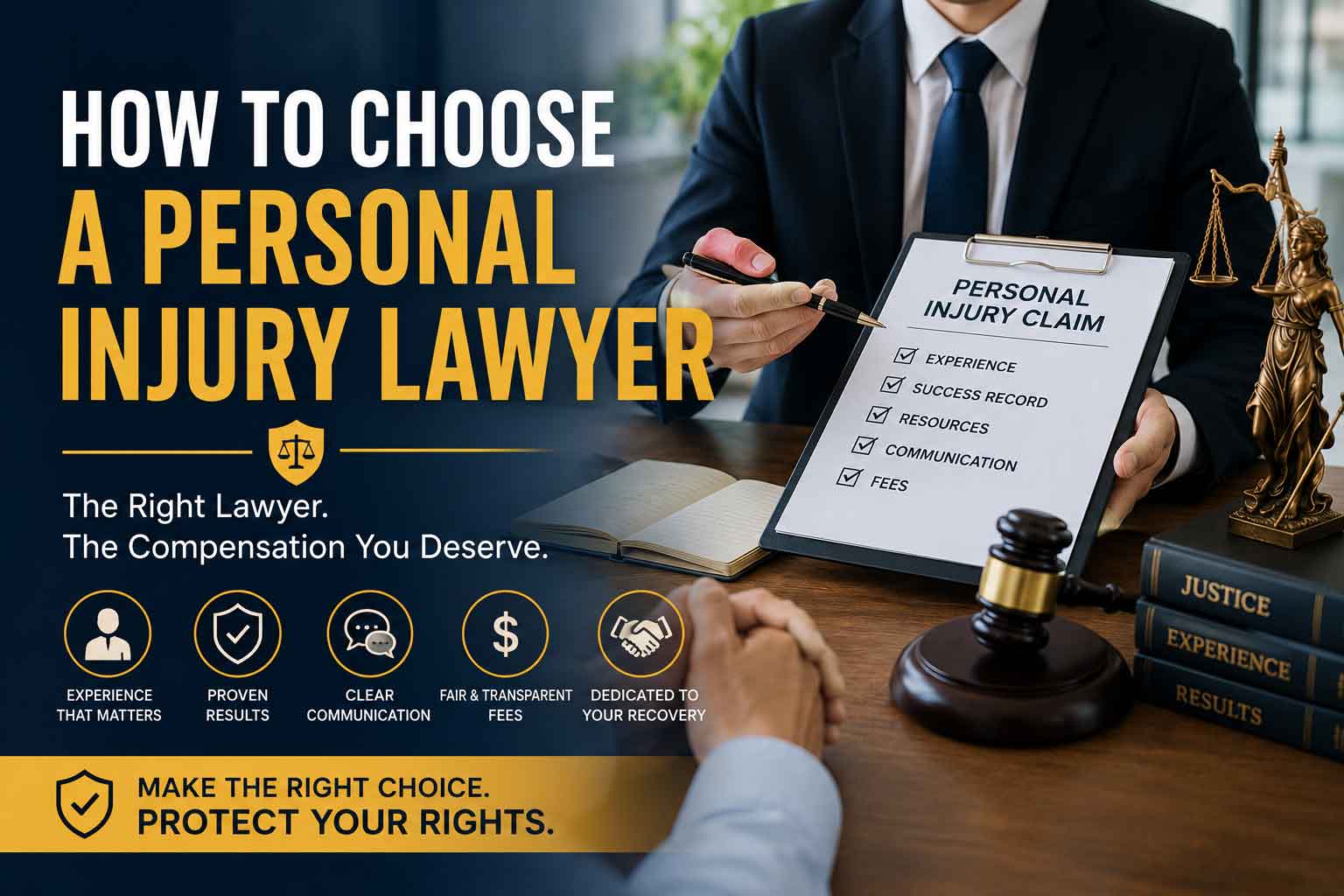
If you’ve been injured due to someone else’s negligence, knowing How to Choose a Personal Injury Lawyer can make a significant difference in the outcome of your case. The attorney you hire will influence your compensation, legal strategy, and overall experience throughout the claims process.
With thousands of law firms advertising their services, selecting the right lawyer may feel overwhelming. This guide explains exactly what to look for, what questions to ask, and how to avoid costly mistakes when hiring legal representation.

Why Choosing the Right Personal Injury Lawyer Matters
Personal injury cases often involve:
- Medical expenses
- Lost wages
- Insurance disputes
- Pain and suffering claims
- Long-term rehabilitation costs
The right attorney can help maximize compensation while protecting your legal rights.
A skilled lawyer understands:
- State personal injury laws
- Insurance company tactics
- Settlement negotiations
- Trial procedures
An inexperienced attorney may leave valuable compensation on the table.
What Does a Personal Injury Lawyer Do?
A personal injury lawyer represents individuals harmed by another party’s negligence.
Common case types include:
- Car accidents
- Motorcycle accidents
- Truck accidents
- Slip and fall injuries
- Medical malpractice
- Workplace accidents
- Wrongful death claims
- Product liability cases
Their primary goal is to recover compensation for damages suffered by the victim.
How to Choose a Personal Injury Lawyer: Step-by-Step Guide
1. Look for Experience in Personal Injury Law
Not all lawyers specialize in personal injury claims.
Some focus on:
- Criminal defense
- Family law
- Real estate
- Corporate law
Choose an attorney whose primary practice area is personal injury litigation.
Why Experience Matters
Experienced lawyers understand:
- Injury valuation
- Medical evidence
- Insurance negotiations
- Court procedures
They can often identify opportunities and risks that less experienced attorneys may overlook.
2. Check Their Track Record
One of the most important factors in How to Choose a Personal Injury Lawyer is reviewing their results.
Ask:
- How many injury cases have you handled?
- What settlements have you secured?
- Have you won cases similar to mine?
Past performance doesn’t guarantee future results, but it provides insight into capability and experience.
3. Read Online Reviews and Testimonials
Client reviews can reveal valuable information.
Look for comments about:
- Communication
- Professionalism
- Responsiveness
- Settlement outcomes
Check multiple sources and look for consistent patterns.
A strong reputation is often a positive sign.
4. Verify Trial Experience
Most personal injury cases settle before trial.
However, insurance companies often offer higher settlements when they know a lawyer is willing and able to go to court.
Ask:
- How many trials have you handled?
- What were the outcomes?
- Are you prepared to litigate if necessary?
Trial-ready attorneys often have greater negotiating power.
5. Evaluate Communication Skills
Communication is critical during a legal case.
Your lawyer should:
- Return calls promptly
- Explain legal concepts clearly
- Provide regular updates
- Answer questions honestly
Poor communication can create frustration and misunderstandings.
6. Understand Their Fee Structure
Most personal injury lawyers work on contingency fees.
What Is a Contingency Fee?
You pay:
- No upfront legal fees
- No hourly billing
- No attorney fees unless you win
The lawyer receives a percentage of your settlement or verdict.
Always request a written fee agreement before signing.
7. Ask About Additional Costs
Legal cases may involve expenses beyond attorney fees.
Examples include:
- Court filing fees
- Medical record costs
- Expert witness fees
- Investigation expenses
- Deposition costs
Ask who pays these expenses if the case is unsuccessful.
8. Schedule a Free Consultation
Most personal injury attorneys offer free consultations.
Use this opportunity to assess:
- Knowledge
- Professionalism
- Transparency
- Comfort level
The consultation can reveal whether the lawyer is a good fit for your needs.
9. Determine Who Will Handle Your Case
At larger law firms, the attorney you meet may not personally manage your case.
Ask:
- Will you handle my case?
- Will associates assist?
- Who is my primary contact?
Knowing who will work on your case helps set expectations.
10. Evaluate Their Resources
Successful injury cases often require significant resources.
A strong law firm may have access to:
- Medical experts
- Accident reconstruction specialists
- Private investigators
- Economic experts
These resources can strengthen your claim and increase compensation.
11. Assess Their Negotiation Skills
Insurance companies rarely offer maximum compensation initially.
Strong negotiators know how to:
- Present evidence effectively
- Challenge low offers
- Calculate true damages
- Leverage trial readiness
Negotiation ability directly impacts settlement value.
12. Look for Industry Recognition
While awards shouldn’t be the sole factor, professional recognition can indicate credibility.
Look for:
- Legal associations
- Industry certifications
- Professional memberships
- Speaking engagements
- Published legal articles
These accomplishments often reflect expertise.
13. Consider Local Knowledge
Local attorneys understand:
- Regional courts
- Judges
- Local insurance practices
- State-specific injury laws
This knowledge may provide strategic advantages throughout your case.
14. Ask About Case Strategy
Every injury case is unique.
Ask:
- What approach would you recommend?
- What challenges do you foresee?
- What timeline should I expect?
Experienced attorneys should provide thoughtful, realistic answers.
15. Trust Your Instincts
Beyond credentials and experience, trust matters.
Ask yourself:
- Do I feel comfortable with this lawyer?
- Do they listen carefully?
- Do they seem genuinely interested in my case?
The attorney-client relationship often lasts months or years.
Choose someone you trust and respect.
Red Flags to Avoid
When learning How to Choose a Personal Injury Lawyer, recognizing warning signs is equally important.
Guaranteed Results
No lawyer can guarantee victory.
Be cautious of unrealistic promises.
Lack of Transparency
Avoid attorneys who:
- Avoid discussing fees
- Refuse to answer questions
- Provide vague explanations
Poor Communication
Delayed responses during consultations may signal future issues.
Limited Experience
Personal injury law requires specialized knowledge.
Avoid lawyers who rarely handle injury cases.
Questions to Ask During Your Consultation
Prepare a list of questions before meeting an attorney.
Examples include:
- How long have you practiced personal injury law?
- Have you handled cases like mine?
- What is your contingency fee?
- Will you personally manage my case?
- How often will I receive updates?
- What compensation might be available?
- Have you taken similar cases to trial?
These questions help compare multiple attorneys objectively.
Common Mistakes People Make When Hiring a Lawyer
Choosing Based on Advertising Alone
Television commercials and billboards don’t necessarily indicate quality.
Hiring the Cheapest Attorney
Low fees may reflect limited experience or resources.
Failing to Research Reputation
Always review client feedback and professional credentials.
Waiting Too Long
Evidence can disappear and legal deadlines may expire.
Early legal consultation is often beneficial.
The Importance of E-E-A-T in Legal Services
Google places special emphasis on legal content because legal decisions can significantly impact people’s lives.
High-quality law firms demonstrate:
Experience
Years of handling injury claims.
Expertise
Specialized legal knowledge.
Authoritativeness
Recognition within the legal community.
Trustworthiness
Transparency, ethics, and strong client relationships.
When selecting an attorney, these principles can help identify reputable professionals.
Future Trends in Personal Injury Law
Modern injury litigation increasingly relies on technology.
Examples include:
- Dashcam footage
- Vehicle telematics data
- Smartphone evidence
- AI-assisted accident reconstruction
- Digital medical records
Attorneys who embrace modern technology often build stronger cases.
Frequently Asked Questions
How Soon Should I Hire a Personal Injury Lawyer?
Ideally, immediately after seeking medical treatment.
Early legal involvement helps preserve evidence and protect your rights.
What If I Cannot Afford a Lawyer?
Most personal injury lawyers work on contingency fees, meaning you pay only if compensation is recovered.
Can I Change Lawyers Later?
In many cases, yes. However, changing representation may cause delays.
How Long Does a Personal Injury Case Take?
Simple cases may settle within months, while complex litigation can take a year or longer.
Final Thoughts
Understanding How to Choose a Personal Injury Lawyer is one of the most important steps after an accident or injury. The right attorney can help maximize compensation, reduce stress, and guide you through a complex legal process.
Focus on experience, reputation, communication, transparency, and proven results when evaluating potential lawyers. Take advantage of free consultations, ask detailed questions, and compare multiple options before making your decision.
A well-informed choice today can have a lasting impact on your financial recovery and future well-being.