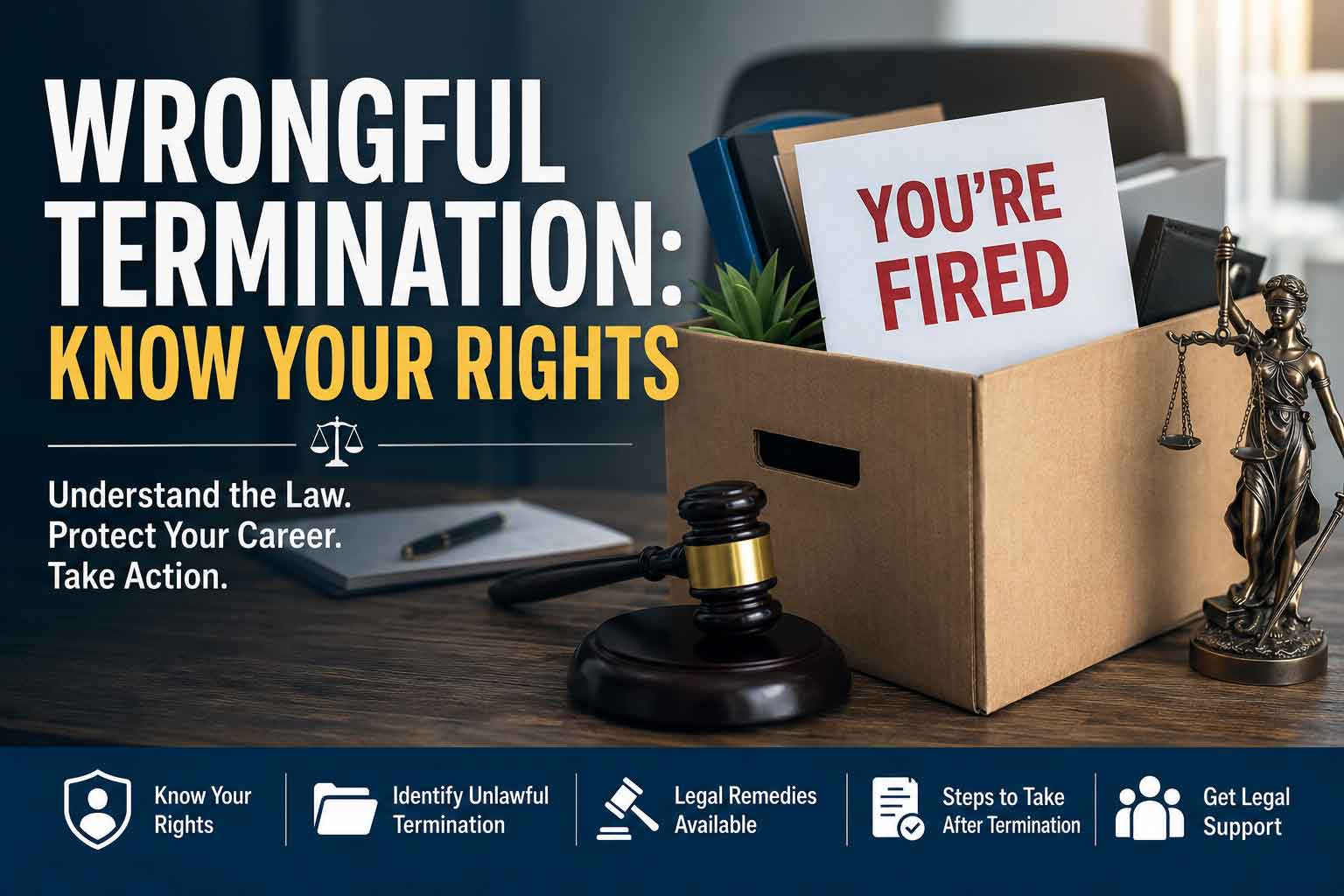
Losing a job unexpectedly can be devastating, especially if you believe your employer acted unfairly or illegally. Understanding Wrongful Termination: Know Your Rights is essential for protecting your career, finances, and legal interests.
Many employees assume employers can fire them for any reason. While employers often have broad authority, there are important legal protections that prevent unlawful dismissals. This guide explains wrongful termination laws, employee rights, legal remedies, and steps you should take if you believe you were fired illegally.
What Is Wrongful Termination?
Wrongful termination occurs when an employer fires an employee in violation of federal, state, or local laws, employment contracts, or public policy protections.
Not every unfair firing qualifies as wrongful termination. The termination must violate a specific legal right or protection.
Examples include:
- Firing based on discrimination
- Retaliation for reporting misconduct
- Termination for taking protected leave
- Violating an employment contract
- Punishing employees for exercising legal rights
Understanding these distinctions is the first step in learning Wrongful Termination: Know Your Rights.
At-Will Employment Explained
Most employees in the United States work under “at-will employment.”
This generally means:
- Employers may terminate employees at any time
- Employees may quit at any time
- No advance notice is required
However, at-will employment does not permit illegal termination.
Employers cannot fire workers for reasons prohibited by law.

Common Examples of Wrongful Termination
Discrimination-Based Termination
Federal and state laws prohibit employers from firing workers because of protected characteristics.
Protected categories often include:
- Race
- Color
- Religion
- National origin
- Sex
- Pregnancy
- Disability
- Age (40 and older)
- Genetic information
If an employee is terminated because of one of these factors, the employer may face legal liability.
Retaliation
Retaliation occurs when an employer punishes an employee for engaging in protected activities.
Examples include:
- Reporting harassment
- Filing a discrimination complaint
- Participating in workplace investigations
- Reporting wage violations
- Reporting safety concerns
Retaliation claims are among the most common employment lawsuits.
Whistleblower Termination
Employees who report illegal activities are often protected by whistleblower laws.
Examples include reporting:
- Fraud
- Financial misconduct
- Environmental violations
- Workplace safety violations
- Government contract fraud
Employers generally cannot terminate workers simply for exposing unlawful conduct.
Termination for Taking Protected Leave
Employees may have legal rights under leave laws.
Protected leave may include:
- Family medical leave
- Military leave
- Jury duty
- Voting leave
- Pregnancy-related leave
Terminating an employee for using legally protected leave may constitute wrongful termination.
Breach of Employment Contract
Some employees work under written or implied contracts.
Contracts may specify:
- Grounds for termination
- Required disciplinary procedures
- Notice requirements
Employers who violate contractual terms may face breach-of-contract claims.
Signs You May Have Been Wrongfully Terminated
Not every unlawful firing is obvious.
Potential warning signs include:
Sudden Termination After a Complaint
You reported:
- Harassment
- Safety violations
- Discrimination
- Wage theft
Then shortly afterward you were fired.
Timing can be important evidence.
Inconsistent Explanations
Employers who provide changing reasons for termination may face scrutiny.
For example:
- Initially citing performance issues
- Later claiming misconduct
- Later claiming downsizing
Inconsistencies can weaken the employer’s defense.
Unequal Treatment
If coworkers committed similar conduct but were not terminated, discrimination may be involved.
Violation of Company Policies
Employers who ignore established disciplinary procedures may create legal risks.
Protected Employee Rights
One important aspect of Wrongful Termination: Know Your Rights is understanding the protections available under employment laws.
Employees often have rights involving:
Equal Employment Opportunities
Workers must receive fair treatment regardless of protected status.
Workplace Safety
Employees can report unsafe conditions without fear of retaliation.
Wage and Hour Rights
Workers may:
- Request unpaid wages
- Report overtime violations
- Challenge wage theft
Family and Medical Leave
Eligible employees may take protected leave under applicable laws.
Freedom from Harassment
Employees have the right to work in environments free from unlawful harassment.
Federal Laws That Protect Employees
Several federal laws provide workplace protections.
Title VII of the Civil Rights Act
Prohibits discrimination based on:
- Race
- Religion
- Sex
- National origin
- Color
Americans with Disabilities Act (ADA)
Protects qualified workers with disabilities.
Employers must provide reasonable accommodations when appropriate.
Age Discrimination in Employment Act (ADEA)
Protects workers age 40 and older.
Family and Medical Leave Act (FMLA)
Allows eligible employees to take protected leave for qualifying reasons.
Occupational Safety and Health Act (OSHA)
Protects workers who report workplace safety concerns.
State Laws May Provide Additional Protections
Many states provide stronger protections than federal law.
These may include:
- Expanded discrimination protections
- Additional leave rights
- Whistleblower protections
- Higher damages for violations
Employees should review laws applicable in their jurisdiction.
What Evidence Helps Prove Wrongful Termination?
Evidence plays a critical role in employment disputes.
Employment Records
Helpful documents may include:
- Employment contracts
- Offer letters
- Employee handbooks
- Performance reviews
Written Communications
Preserve:
- Emails
- Text messages
- Internal messages
- Written warnings
Witness Statements
Coworkers may provide valuable testimony.
Timeline of Events
Create a detailed timeline including:
- Protected activity
- Employer response
- Disciplinary actions
- Termination date
A clear timeline often strengthens legal claims.
What to Do After Being Wrongfully Terminated
Step 1: Remain Professional
Avoid emotional confrontations.
Professional behavior can help your case later.
Step 2: Request Documentation
Ask for:
- Termination notice
- Final paycheck information
- Benefits details
Step 3: Preserve Evidence
Save:
- Emails
- Contracts
- Reviews
- Pay records
Do not alter documents.
Step 4: Write Down Key Facts
Document:
- Conversations
- Dates
- Witnesses
- Events leading to termination
Step 5: Consult an Employment Lawyer
Early legal advice may prevent mistakes and improve outcomes.
How Employment Lawyers Evaluate Cases
Lawyers often review:
Legal Violations
Was a specific law violated?
Evidence Strength
Can the employee prove wrongdoing?
Damages
What financial losses occurred?
Witness Availability
Are there individuals who can support the claim?
A strong case generally requires both legal violations and supporting evidence.
Compensation Available in Wrongful Termination Cases
Successful claims may result in various remedies.
Lost Wages
Compensation may include:
- Past wages
- Future wages
- Lost bonuses
- Lost commissions
Benefits
Employees may recover:
- Health insurance losses
- Retirement contributions
- Stock benefits
Emotional Distress Damages
Some cases permit compensation for emotional harm.
Punitive Damages
Courts may award punitive damages when employer misconduct is particularly severe.
Attorney Fees
Certain laws allow successful employees to recover legal costs.
Wrongful Termination Settlement vs Trial
Many employment disputes settle before reaching court.
Benefits of Settlement
- Faster resolution
- Lower costs
- Reduced stress
- Privacy
Benefits of Trial
- Potentially higher awards
- Public accountability
- Formal legal judgment
The best option depends on the facts of the case.
How Employers Defend Wrongful Termination Claims
Employers commonly argue:
Legitimate Performance Issues
They may claim:
- Poor productivity
- Attendance problems
- Policy violations
Business Necessity
Employers may cite:
- Downsizing
- Restructuring
- Financial difficulties
Lack of Evidence
They may challenge the employee’s proof.
Understanding potential defenses helps employees prepare stronger cases.
How to Protect Yourself Before Problems Arise
Employees can reduce risks by taking proactive steps.
Maintain Records
Keep copies of:
- Performance reviews
- Important emails
- Commendations
Understand Company Policies
Review:
- Employee handbooks
- Complaint procedures
- Leave policies
Report Issues Properly
Follow official reporting channels whenever possible.
Document Retaliation
Maintain records of suspicious behavior after reporting workplace concerns.
Frequently Asked Questions
Can my employer fire me without warning?
In many at-will employment situations, yes. However, termination cannot violate employment laws or contracts.
How long do I have to file a claim?
Deadlines vary depending on the claim and jurisdiction. Acting quickly is important.
Can I sue for emotional distress?
Possibly. Certain wrongful termination cases allow emotional distress damages.
Is poor management the same as wrongful termination?
No. Unfair treatment alone may not be illegal unless it violates a specific law.
Should I accept a severance agreement?
Consulting an employment attorney before signing is often advisable because severance agreements may waive legal rights.
When Should You Contact an Employment Lawyer?
You should consider speaking with an attorney if:
- You suspect discrimination
- You reported illegal conduct
- You were terminated after taking protected leave
- Your contract was violated
- Your employer retaliated against you
The sooner you seek legal advice, the easier it may be to preserve evidence and meet filing deadlines.
Understanding Wrongful Termination: Know Your Rights can help employees recognize when a dismissal crosses the line from unfair to unlawful. While employers often have broad authority to terminate workers, that authority is limited by anti-discrimination laws, whistleblower protections, employment contracts, and public policy safeguards.
If you believe you were wrongfully terminated, act quickly. Preserve evidence, document events, review your employment records, and consult an experienced employment attorney. Knowing your rights today could protect your career, financial future, and legal interests tomorrow.
Internal Linking
- How to Choose a Personal Injury Lawyer: 15 Essential Tips Before You Hire
- Questions to Ask Before Hiring a Lawyer: The Complete Guide to Choosing the Right Attorney
- Best Car Accident Lawyer Near Me: How to Find the Right Attorney After a Crash
- Personal Injury Lawsuit Timeline Explained: Every Step From Injury to Settlement
- Child Custody Laws Explained: A Complete Guide for Parents in 2026