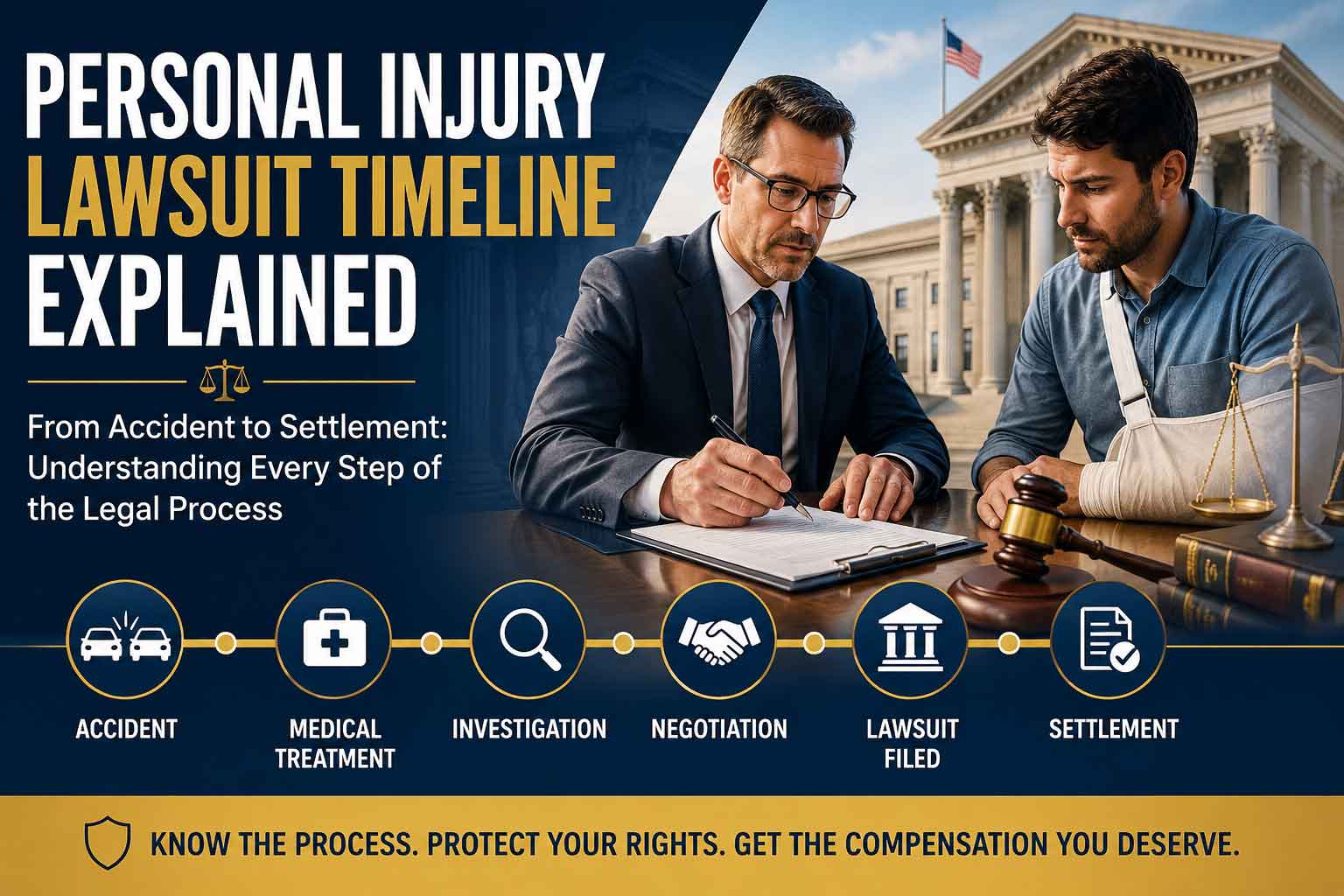
If you’ve been injured because of someone else’s negligence, understanding the legal process can help reduce uncertainty and stress. This Personal Injury Lawsuit Timeline Explained guide walks you through every stage of a personal injury case, from the initial accident through settlement negotiations and potential trial.
While every case is unique, most personal injury claims follow a similar path. Knowing what to expect can help you make informed decisions and maximize your chances of receiving fair compensation.

What Is a Personal Injury Lawsuit?
A personal injury lawsuit is a legal claim filed by an injured person seeking compensation for damages caused by another party’s negligence or wrongdoing.
Common personal injury cases include:
- Car accidents
- Truck accidents
- Motorcycle accidents
- Slip and fall accidents
- Workplace injuries
- Medical malpractice
- Product liability claims
- Wrongful death cases
The goal is to recover compensation for:
- Medical expenses
- Lost wages
- Property damage
- Pain and suffering
- Emotional distress
- Future medical treatment
Personal Injury Lawsuit Timeline Explained: Step-by-Step Process
Step 1: Accident or Injury Occurs
The timeline begins when the injury happens.
Immediately after an accident, important actions include:
- Seeking medical treatment
- Reporting the incident
- Collecting evidence
- Taking photographs
- Obtaining witness information
- Preserving records and receipts
The actions taken during the first few days can significantly affect the strength of a future legal claim.
Why Immediate Medical Treatment Matters
Medical records provide:
- Proof of injury
- Documentation of treatment
- Evidence connecting injuries to the accident
Insurance companies often use delays in treatment as an argument against compensation.
Step 2: Initial Consultation With a Personal Injury Lawyer
Most personal injury attorneys offer free consultations.
During the meeting, the lawyer typically reviews:
- Accident details
- Medical records
- Police reports
- Insurance information
- Potential liability issues
What Attorneys Evaluate
A lawyer generally considers:
- Who caused the accident
- Available evidence
- Injury severity
- Potential damages
- Insurance coverage limits
If the case appears viable, the attorney may agree to represent the client on a contingency fee basis.
Typical Time Frame
1 day to 2 weeks after the accident
Step 3: Investigation and Evidence Collection
After being hired, the attorney begins building the case.
This phase may involve:
- Reviewing accident reports
- Interviewing witnesses
- Obtaining surveillance footage
- Gathering medical records
- Consulting experts
- Examining insurance policies
Important Evidence Collected
Medical Evidence
- Hospital records
- Diagnostic imaging
- Physician reports
- Treatment plans
Liability Evidence
- Police reports
- Photos
- Videos
- Witness statements
Financial Evidence
- Wage loss documentation
- Medical bills
- Rehabilitation expenses
Typical Time Frame
Several weeks to several months
Complex cases often require extensive investigation.
Step 4: Medical Treatment and Recovery
One of the most important stages in the Personal Injury Lawsuit Timeline Explained process is completing medical treatment.
Most attorneys recommend waiting until:
- Recovery is complete, or
- Doctors can estimate future medical needs
Why Settlement Should Not Happen Too Early
Accepting a settlement before understanding the full extent of injuries can lead to:
- Unpaid medical expenses
- Inadequate compensation
- Future financial hardship
Typical Time Frame
Several months to more than a year
The severity of injuries largely determines this stage.
Step 5: Demand Letter Sent to Insurance Company
Once damages are reasonably known, the attorney prepares a demand package.
The package generally includes:
- Liability evidence
- Medical records
- Medical bills
- Lost income documentation
- Pain and suffering analysis
Purpose of the Demand Letter
The demand letter requests compensation and explains:
- Why the defendant is responsible
- The extent of injuries
- Financial losses suffered
Typical Time Frame
2–6 months after treatment stabilization
Step 6: Insurance Negotiations
Many cases settle during negotiations without a lawsuit ever being filed.
Insurance adjusters often:
- Review evidence
- Evaluate damages
- Make settlement offers
- Request additional information
Common Negotiation Stages
- Initial demand
- Insurance review
- First offer
- Counteroffer
- Continued negotiations
- Settlement agreement
Reasons Negotiations Take Time
- Disputed liability
- Serious injuries
- High medical expenses
- Multiple defendants
- Insurance policy limitations
Typical Time Frame
Several weeks to several months
Step 7: Filing the Personal Injury Lawsuit
If negotiations fail, the attorney may file a lawsuit.
The complaint outlines:
- Facts of the case
- Legal claims
- Requested damages
The defendant is formally served with legal documents and given an opportunity to respond.
Statute of Limitations Warning
Every state has deadlines for filing personal injury claims.
Missing the statute of limitations may permanently bar recovery.
Consult an attorney as soon as possible to protect your legal rights.
Typical Time Frame
Several months to several years after injury, depending on the case
Step 8: Defendant Files an Answer
After receiving the lawsuit, the defendant submits a formal response.
The answer may:
- Admit facts
- Deny allegations
- Raise defenses
- Challenge damages
This officially begins the litigation phase.
Typical Time Frame
20–60 days after filing
Varies by jurisdiction.
Step 9: Discovery Phase
Discovery is often the longest stage in a personal injury lawsuit.
Both sides exchange information and evidence.
Types of Discovery
Interrogatories
Written questions requiring sworn answers.
Requests for Documents
Parties exchange:
- Medical records
- Employment records
- Insurance documents
- Financial information
Depositions
Witnesses answer questions under oath before trial.
Independent Medical Examination
The defense may request an examination by their chosen physician.
Why Discovery Matters
Discovery helps:
- Reveal evidence
- Evaluate strengths and weaknesses
- Encourage settlement discussions
Typical Time Frame
6–18 months
Complex cases may take longer.
Step 10: Mediation and Settlement Conferences
Courts often require alternative dispute resolution before trial.
What Happens During Mediation?
A neutral mediator helps both parties negotiate.
The mediator:
- Facilitates discussions
- Identifies strengths and weaknesses
- Encourages compromise
Benefits of Mediation
- Faster resolution
- Lower costs
- Less stress
- Greater control over outcomes
Many cases settle during mediation.
Typical Time Frame
Several months before trial
Step 11: Trial Preparation
If settlement efforts fail, attorneys prepare for trial.
Tasks include:
- Witness preparation
- Expert testimony planning
- Exhibit organization
- Jury instructions
- Legal motions
Pre-Trial Motions
Lawyers may ask the court to:
- Exclude evidence
- Limit testimony
- Resolve legal disputes
Typical Time Frame
Several weeks to several months
Step 12: Trial
Trials occur when parties cannot reach a settlement agreement.
Trial Process Overview
- Jury selection
- Opening statements
- Plaintiff evidence
- Defense evidence
- Closing arguments
- Jury deliberation
- Verdict
Possible Outcomes
- Plaintiff wins compensation
- Defendant prevails
- Partial liability assigned
- Post-trial settlement
Typical Trial Length
- Simple cases: 1–3 days
- Moderate cases: 1–2 weeks
- Complex cases: Several weeks
Step 13: Appeals (If Necessary)
After trial, either party may appeal.
An appeal argues that legal errors affected the verdict.
Common Appeal Grounds
- Improper jury instructions
- Incorrect legal rulings
- Admission of improper evidence
Typical Time Frame
Several months to multiple years
Fortunately, many cases conclude before reaching this stage.
Factors That Affect a Personal Injury Lawsuit Timeline
Several variables influence how long a case takes.
Injury Severity
More serious injuries require longer medical treatment and evaluation.
Liability Disputes
Cases involving disputed fault often take longer to resolve.
Insurance Company Cooperation
Some insurers negotiate quickly while others aggressively contest claims.
Multiple Defendants
Cases involving several parties typically require additional investigation.
Court Backlogs
Busy court systems may significantly extend litigation timelines.
Expert Witness Requirements
Medical experts, accident reconstruction specialists, and economists often add complexity and time.
Average Personal Injury Lawsuit Timeline
Although each case differs, a general estimate looks like this:
| Stage | Estimated Time |
|---|---|
| Medical Treatment | 1–12 Months |
| Investigation | 1–6 Months |
| Negotiations | 1–6 Months |
| Litigation | 6–24 Months |
| Trial | Days to Weeks |
| Appeal | Months to Years |
Overall, many personal injury cases resolve within:
6 months to 2 years
More complex lawsuits may take considerably longer.
Tips for Moving Your Case Forward Faster
Follow Medical Advice
Attend all appointments and follow treatment recommendations.
Maintain Documentation
Keep records of:
- Bills
- Receipts
- Correspondence
- Medical reports
Respond Promptly
Provide requested information quickly.
Avoid Social Media Mistakes
Insurance companies may monitor public posts.
Work With an Experienced Attorney
Knowledgeable legal representation often helps avoid unnecessary delays.
Frequently Asked Questions
How long does a personal injury settlement take?
Many settlements occur within six months to one year, though severe injury cases may take longer.
Do most personal injury cases go to trial?
No. Most personal injury claims settle before trial.
Can I settle while a lawsuit is pending?
Yes. Settlement discussions often continue throughout litigation.
What if the insurance company refuses to pay?
Your attorney may file a lawsuit and pursue compensation through the court system.
How much compensation can I receive?
Compensation depends on injury severity, medical expenses, lost income, liability evidence, and other damages.
Understanding the Personal Injury Lawsuit Timeline Explained process can help accident victims navigate a complex legal journey with greater confidence. From the initial injury and medical treatment to negotiations, litigation, and potential trial, each stage plays a critical role in securing fair compensation.
Because every case is unique, timelines vary widely. Working with an experienced personal injury attorney, maintaining thorough documentation, and following medical recommendations can significantly improve both the efficiency and outcome of your claim. If you’ve suffered injuries due to someone else’s negligence, taking prompt action is often the best way to protect your rights and maximize your recovery.
Internal Linking
- Average Car Accident Settlement Amounts: What Victims Can Expect in 2026
- How Much Does a Divorce Lawyer Cost? Complete 2026 Guide to Divorce Attorney Fees
- What Does a Truck Accident Attorney Do? A Complete Guide for Accident Victims
- How to Choose a Personal Injury Lawyer: 15 Essential Tips Before You Hire
- Questions to Ask Before Hiring a Lawyer: The Complete Guide to Choosing the Right Attorney
- Best Car Accident Lawyer Near Me: How to Find the Right Attorney After a Crash